Environmental Dimension
Vichaivej International Hospital Group conduct healthcare operations alongside responsible environmental stewardship. The Group recognizes that hospital operations involve the use of energy, water, fuel, waste management, and greenhouse gas emissions, all of which are material to stakeholders, surrounding communities, and the environment. Accordingly, the Group has established environmental policies and practices covering electricity and fuel management, renewable energy, water resources and water quality, waste management, biodiversity, greenhouse gas management, air quality, noise pollution, and remediation measures for environmental impacts where relevant.
Environmental Performance
Vichaivej International Hospital Group conduct healthcare operations alongside responsible environmental stewardship. The Group recognizes that hospital operations involve the use of energy, water, fuel, waste management, and greenhouse gas emissions, all of which are material to stakeholders, surrounding communities, and the environment. Accordingly, the Group has established environmental policies and practices covering electricity and fuel management, renewable energy, water resources and water quality, waste management, biodiversity, greenhouse gas management, air quality, noise pollution, and remediation measures for environmental impacts where relevant.
Reporting Scope and Base Year
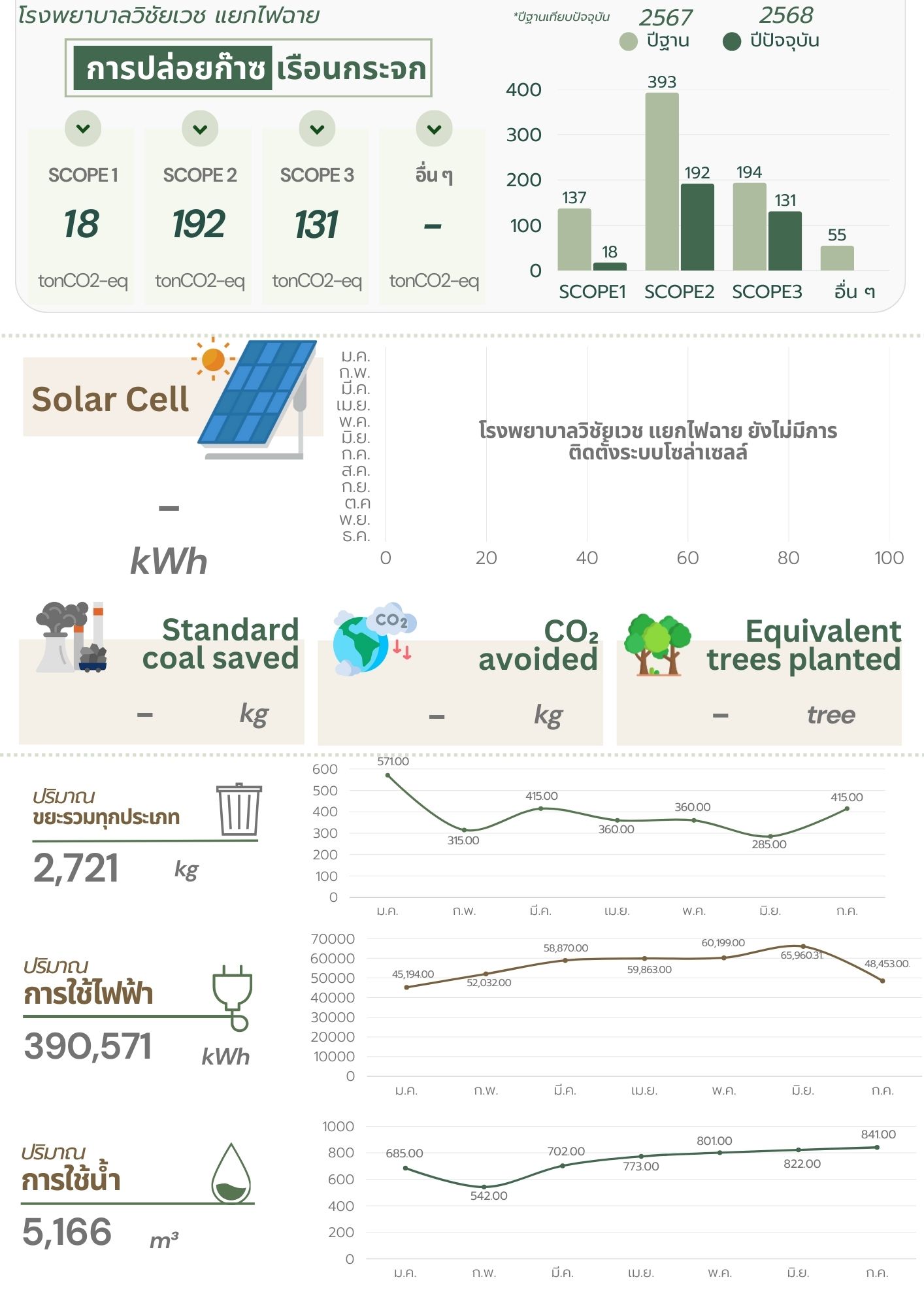
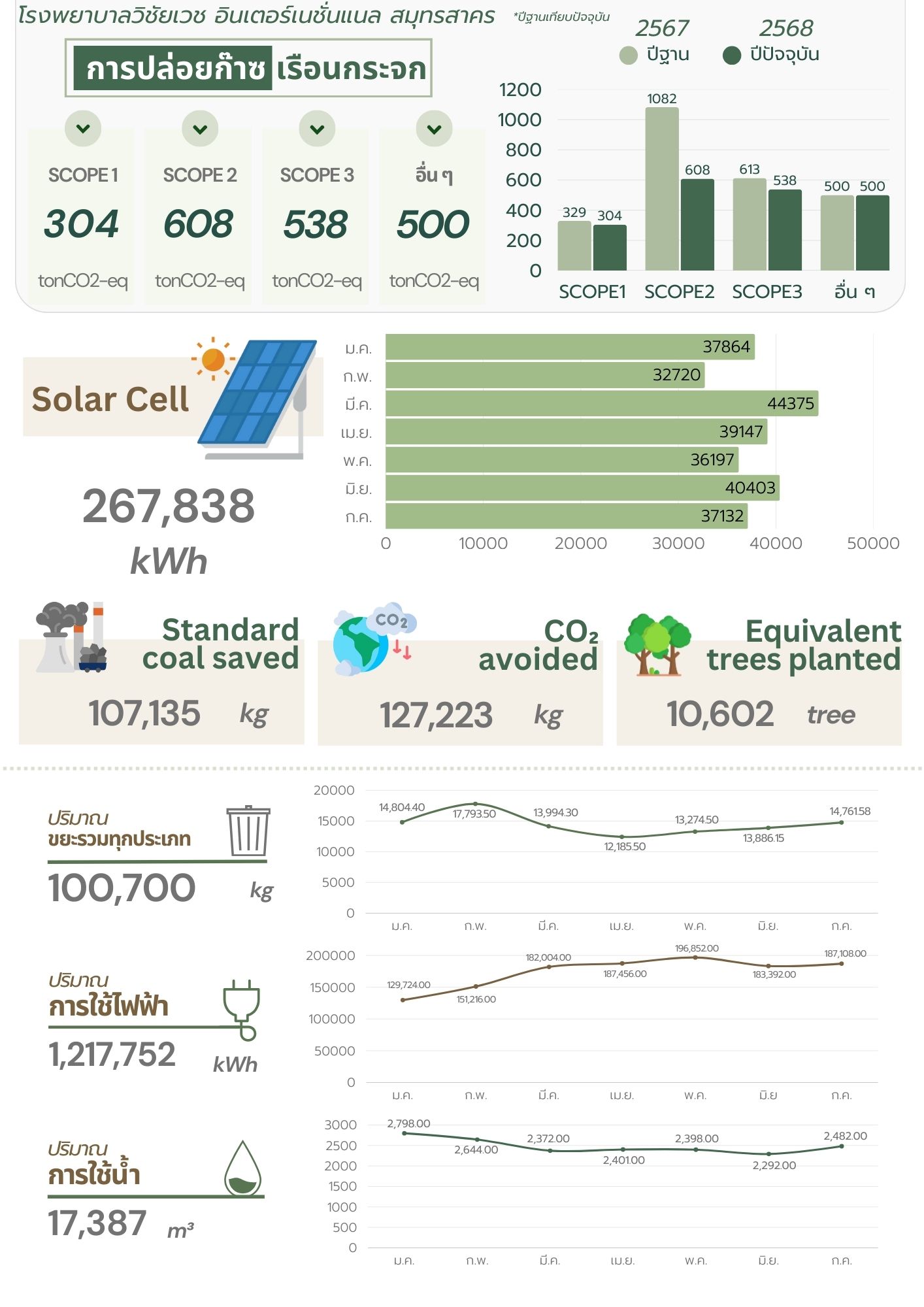
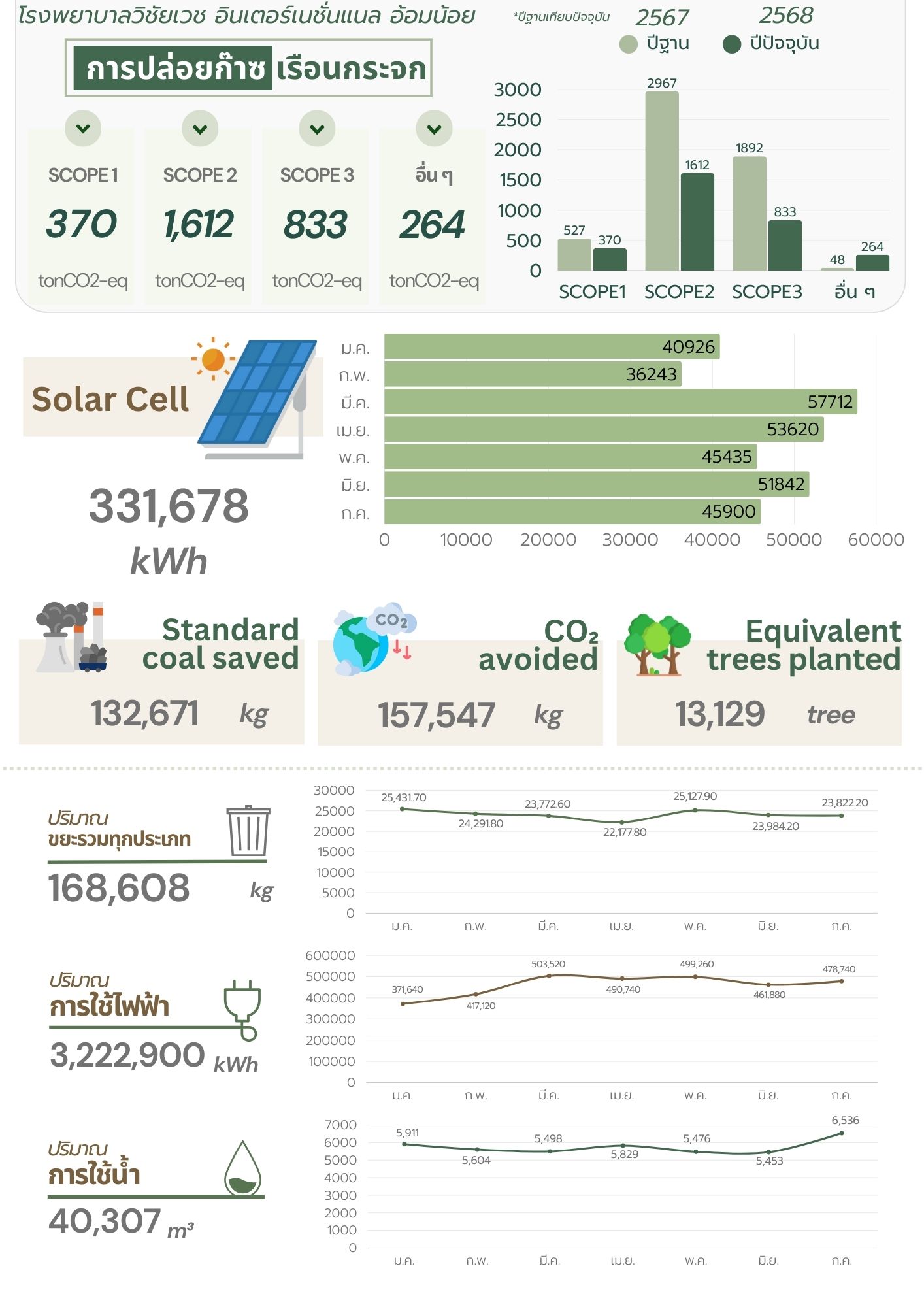
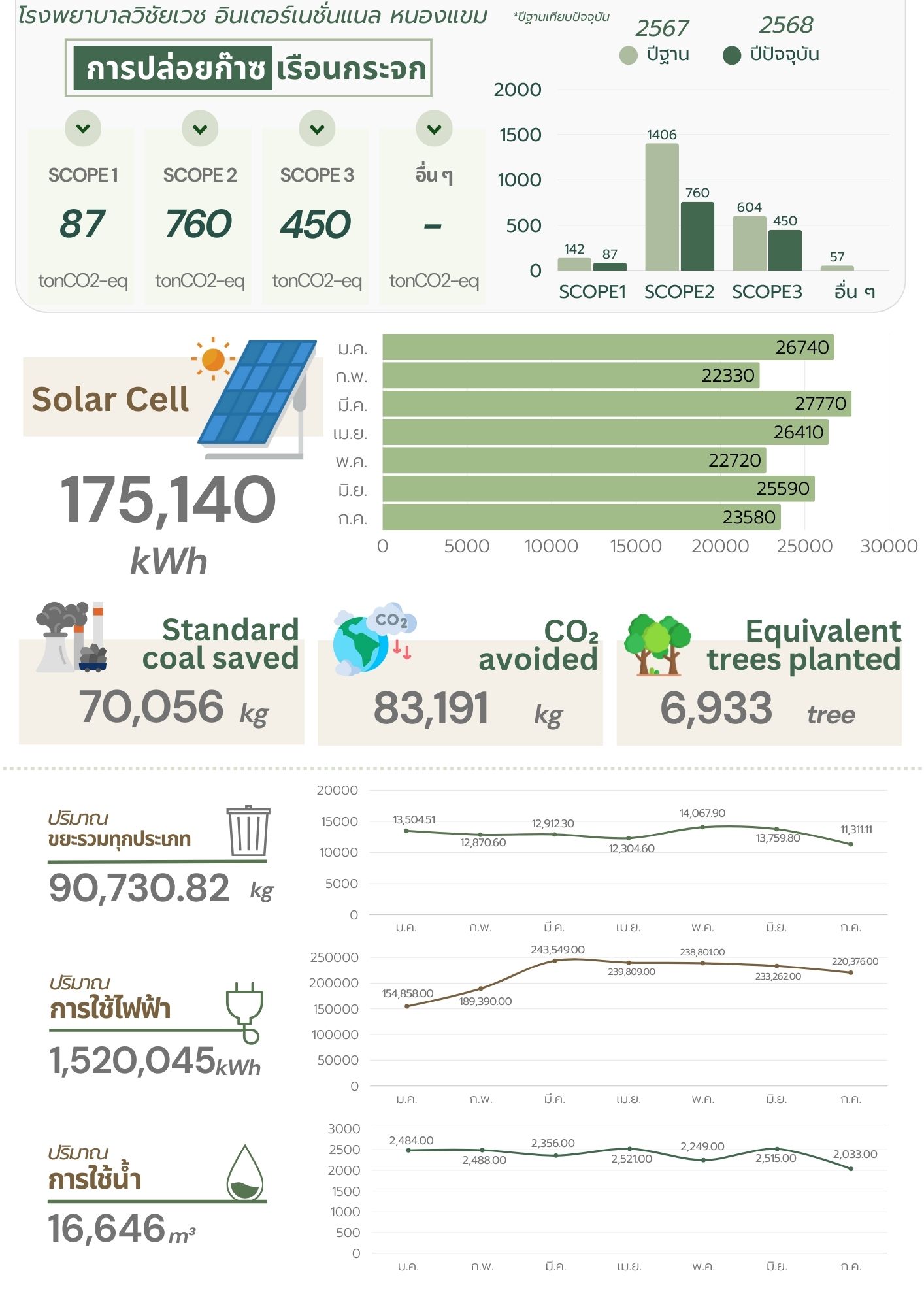
In 2025, the Group reported environmental data at the group level, using 2024 as the base year for performance tracking. This was the first year in which data could be collected and verified across all hospital operations, allowing for more transparent target-setting, performance comparison, and progress monitoring. Renewable electricity data cover Vichaivej International Hospital Omnoi, Nongkhaem, and Samutsakhon, and exclude Vichaivej Hospital Yaek Fai Chai.
1.Energy Management
The Group places strong emphasis on energy efficiency and has implemented an energy management plan to support lower energy consumption, greater use of renewable energy, and reduced greenhouse gas emissions. The plan covers energy assessment and planning, energy efficiency improvement, renewable energy adoption, employee awareness and engagement, and regular monitoring and evaluation, with building, maintenance, and environmental teams across the hospital network serving as key implementing units.
Targets
By 2028, compared with the 2024 base year, the Group targets a 20% reduction in purchased electricity, a 10% reduction in fuel consumption, a 10% increase in renewable electricity use, and a 10% increase in renewable fuel use.
2025 Performance
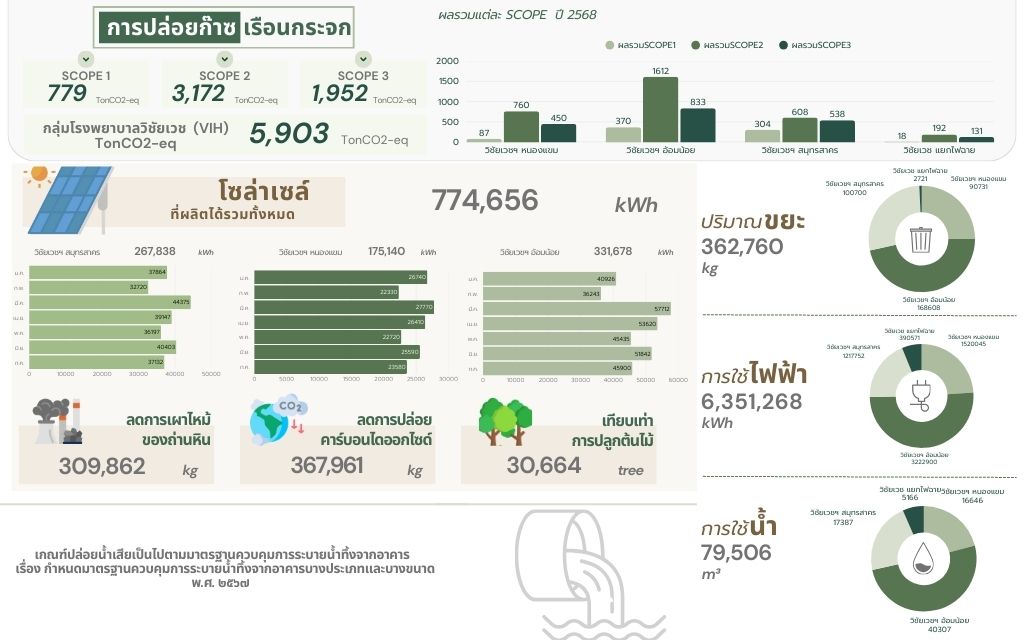
In 2025, total electricity consumption declined from 12,954,697.09 kWh in the base year to 12,096,653.80 kWh, representing a 6.62% reduction. Purchased electricity decreased from 11,693,453.00 kWh to 10,819,319.00 kWh, down 7.48%, while electricity purchased or generated from renewable sources increased from 1,261,244.09 kWh to 1,277,334.80 kWh, up 1.28%.
2. Water Management
The Group manages water resources carefully in view of the intensive water requirements of healthcare services, sanitation, and building utilities. Key measures include controlling water use, reducing system losses, maintaining wastewater quality, improving internal plumbing systems, inspecting and repairing leaks, installing water-efficient fixtures, and promoting recycled water use in appropriate activities.
Targets
The Group has set a target to reduce water consumption by 10% by 2028 from the 2024 base year, when total water use stood at 134,730 cubic meters.
2025 Performance
In 2025, total water consumption was 136,265 cubic meters, an increase of 1.14% from the base year. Nevertheless, wastewater treatment remained at 100%, and recycled water use totaled 2,590.44 cubic meters, reflecting systematic water management across all four hospital operations despite continued resource intensity.
3. Waste Management
The Group is committed to sustainable waste management through source reduction, segregation, reuse, recycling, and proper disposal in accordance with the 3Rs principle and applicable requirements. This is particularly important in the healthcare sector, where hazardous and infectious waste must be managed under strict legal and environmental standards. The Group also promotes communication, training, and stakeholder collaboration on an ongoing basis.
Targets
By 2028, the Group targets a 10% increase in the reuse and recycling of non-hazardous waste compared with the 2024 base year.
2025 Performance
In 2025, non-hazardous waste reused and recycled totaled 68,935.31 kilograms, up from 62,713.60 kilograms in 2024, or an increase of 9.92%. At the same time, non-hazardous waste sent to landfill decreased by 1.13%, while waste sent for energy recovery increased to 10,669.88 kilograms.
4. Greenhouse Gas and Climate Management
The Group manages greenhouse gas emissions through a structured and comprehensive approach. It prepares the organizational carbon footprint, reports emissions regularly, and verifies the data annually to support future reduction measures. This approach covers direct emissions from operations (Scope 1), indirect emissions from purchased electricity (Scope 2), and other indirect emissions across the value chain (Scope 3).
Targets
The Group has established a Net Zero Greenhouse Gas Emissions target covering Scopes 1-3, using 2024 as the base year, with total emissions of 10,126 tCO2e. It has set a short-term target to reduce emissions by 32% by 2030 and a long-term target to reduce emissions by 90% by 2050, referenced against the Thailand Greenhouse Gas Management Organization’s net zero pathway.
2025 Performance
In 2025, total greenhouse gas emissions were 9,257 tCO2e, representing a reduction of 8.58% from the base year. Scope 1 emissions were 1,394 tCO2e, Scope 2 emissions were 5,141 tCO2e, and Scope 3 emissions were 2,722 tCO2e.
Verification
The Group reviewed and verified its greenhouse gas emissions data through the Greenhouse Gas Management Certification Unit, School of Energy and Environment, University of Phayao, reinforcing the credibility, transparency, and traceability of its public disclosure.
Key Developments in Environmental Governance
In 2025, the Group further strengthened its environmental governance through several significant developments, including elevating environmental policy to the group level, conducting human rights due diligence on environmental issues, and introducing additional policies on biodiversity and net zero greenhouse gas emissions. These developments reflect the Group’s commitment to responsible growth and consideration of stakeholder impacts across its operations.
Compliance and External Recognition
The Group places importance on strict compliance with environmental laws and requirements while continuously monitoring and managing environmental risks. Its environmental efforts have also been recognized externally through awards and certifications, including the EIA Monitoring Awards at the outstanding level, the Climate Action Leader award, Carbon Footprint for Organization certification, and other environmental recognitions reflecting continued progress in strengthening environmental management standards.
Looking Ahead
The Group will continue to enhance its environmental management system by improving data quality, increasing energy and water efficiency, reducing waste sent for disposal, promoting clean energy, and further lowering greenhouse gas emissions. Through these efforts, the Group aims to create long-term shared value for shareholders, patients, employees, communities, and society as a whole under the principles of transparency, responsibility, and sustainability.